Wednesday, July 6

Only Paris

“I think I naively expected it to be like it was in the twenties.” I felt an urgent need to look around the room to see if anyone had heard those words. “It’s done its dash.” I didn’t expect to feel this way; my stomach didn’t drop, there was no flicker of anger, this was not a justified response.


Everyone remained in their chairs finishing off their tomato and parmesan risotto and crepes with raspberry syrup. No body even flinched. I wanted to run up to him waving my hands through the air to get rid of his statement and in a very definite way, mouth, “Stop, don’t say that. People can hear you.” But then there was this other part. And it hesitated. It would have turned me towards all those people occupying steal industrial dinning tables and light wooden chairs and it would have asked them, “Is it really that true? Do we all just know it now?”


Breath would have left my body and I would have felt lighter in this skin that clings to me. My legs would have stood, unmoved, with hands heavy at my sides and shoulders slumped towards my belly button. There would have been a shuffling of leg chairs on concrete floors. Then all those eyes would have eventually moved back to their temporary happiness of pistachio cake laden with butter.


I’m no down-player. It is 6 o’clock in the morning and my feet feel lonely on the chilled pavement, but I can smell yeast being worked into soft white dough and butter melting into flour as it rises crisp and creamy. And it’s seven in the late afternoon and baguettes with their ends nibbled off are held by hungry hands and are walked home through streets of thick grey concrete curbs and bumpy cobblestones by their admirers. It could be midday, and I wouldn’t be there, but there’s something known by those who own or rent apartments in this city; that the first arrondissement is filled with gypsies pushed up close to Americans as their arms hide under their shoulder sacks and their hands move professionally into heavy pockets. And if you stand on any of those thick curbs, at any time of the day and you look up, you will see seven stories of cream or grey concrete decorated with statues, and if you permit your eyes to venture further to those cobalt tin roofs, they will make way to billowing blue and white speckled skies. I won’t take that away form you.


But then you leave your bistro of white and red table clothes and matching weaved chairs, the one you sat down in to devour duck confit or eat through a classic caesar salad. And if you came here; if you flocked here to this city for the fulfillment of the above paragraph, you will be struck by the bona fide realization that those whom you want to talk with over the free baguette with every meal and laugh with in between casual sips of Côtes du Rhône, never actually imagined the city of lights like you did; in all it’s glory of the nineteen-twenties.


You can’t laugh here like you would have, all flouncy-like in your flappers, and charmingly allowed a flip of the wrist and a shake of your hair in that way that you just know women would have back then. And in that café when you go to write in the afternoon, there actually aren’t many joyful older men to tilt their homburgs down and up again as they smile and walk on by. Day after day, you can’t sit in Duex Magots and find that crowd of writers that once filled its chairs with thoughts-a-little-risky and questions requiring no answers. Simone de Beauvoir has already laughed as Joni Mitchell sung in her park in Paris, France. But Joni, how could you mock me like this?


Let us just become acquainted with the past of the nineteen-twenties. Because you will come to see soon, that those who would appreciate the free baguette with every meal with you, were not even a little bit part of the intended flock North. And the way you wanted to live and eat here, doesn’t in fact reside in this city after all.


Sunday, July 3

Breakfast You Must Try


There’s this tension. There are all these tensions that come about from being someone amongst everyone else. But specifically there is thing that makes little sense to a person who wants to cook for a table filled with people consumed by conversations.

But when you love to cook for one and eat on your own you will make for a terrible host.


All these mouths, they call out for varying touches to their meals; more lemon juice, no red onion, less pepper, no coriander but more cumin, more flavour, less flavour, nothing fishy, I’m more hungry than just salmon and salad, no garlic (I don’t know how you could think that).

And the thought of leaving someone dissatisfied with a meal; “Only if she had used extra virgin olive oil instead of grape seed,” or, “I would have preferred basil to thyme,” which would lead me to respond with, “I can already imagine we would not get along well.”


At the restaurant the other day I was standing up straight in my starch white apron above 90 teeny tiny shells of pastry. Three kinds of delectable fillings were in my mind. These things, which of course I would eat. Roasted aubergine with pea and mint puree and topped with feta. Swiss brown mushrooms that had been sautéed in garlic and butter until every single fungus trickled with delight as it sat baked under a sprinkling of lightly toasted pumpkin seeds. And lastly, smoked salmon with roasted fennel and lemon. And then my boss comes up to me in her matching white apron and in mid assembling she tells me, as if it was gospel, that salmon and fennel don’t go together and that I’ll need to learn that some things don’t compliment other things.


Sometimes there are just too many mouths to satisfy at a table filled with people, whom even though you love them, it can exhaust your brain and make you cry and you realize then, in those moments pre-tears that perhaps not every meal needs to be an occasion to host.


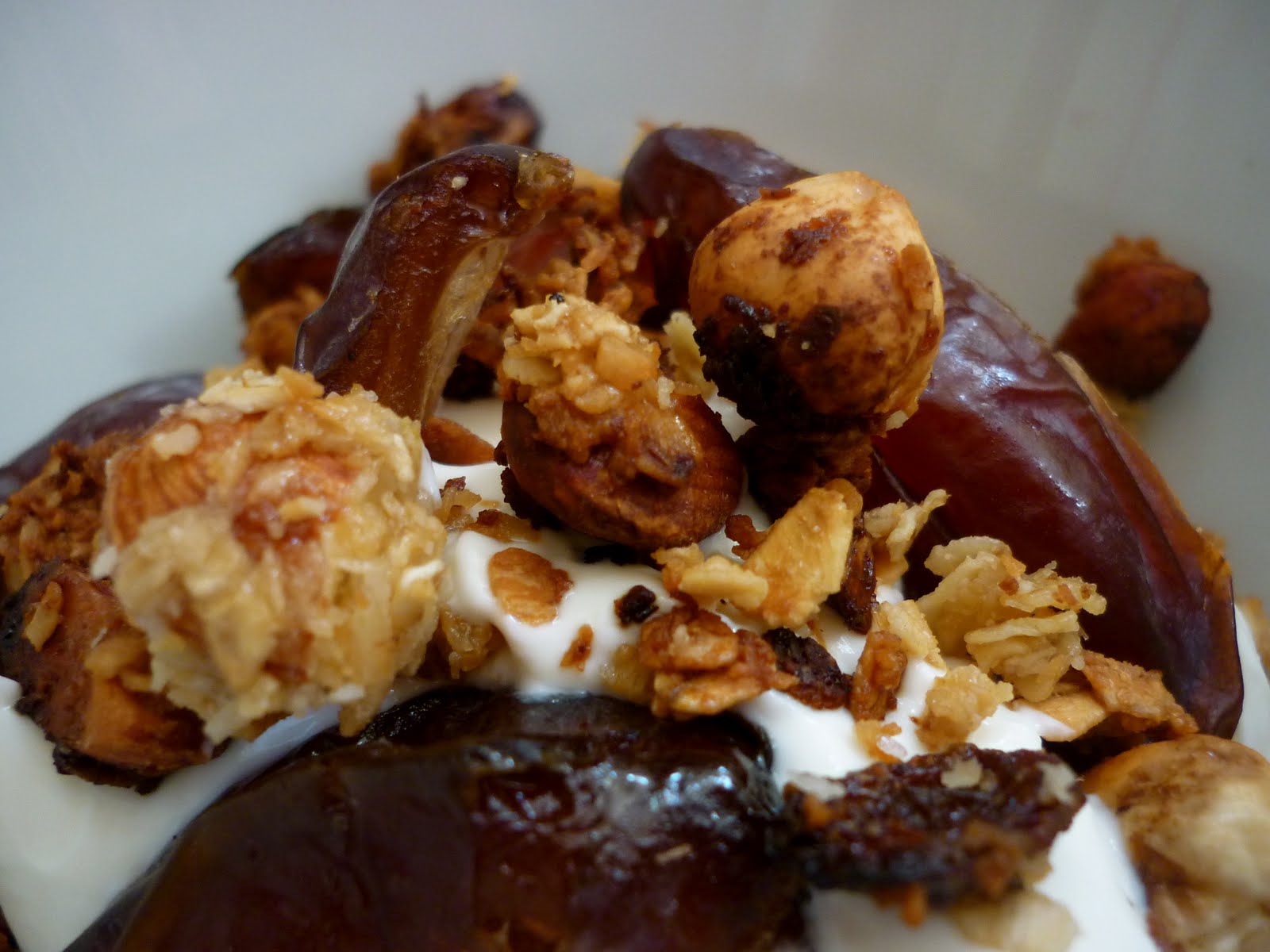
So when tears are looming, especially in the morning before you’ve eaten, why not be kind to yourself? Grab down that box of raw rolled oats, shredded coconut and any kinds of nuts you have and chuck everything you want in a bowl, perhaps even a sprinkling of thyme, in a bowl with a petit splash of milk, extra virgin olive oil and a teaspoon (or more) of honey and mix everything together. Spread this over baking paper on an oven tray, pop it in the oven and bake it until lightly golden. Once it has cooled, reach into your fridge and take out your fromage blanc (or yoghurt if you don’t live in France), fresh medjool dates and perhaps a roasted peach on the side and Bon Appetit!


Eat slowly, savouring every mouthful, and I promise a morning tear free and of great reflection. One day you will see that sometimes that is exactly what is needed; because what is life when it hasn’t be thought about?

Thursday, June 30

Paris and Dining and Being Cooked For.

An afternoon of ambling. Mixed and matched stones was the footpath I pottered on; Bon Iver sang to me as the Eiffel Tower, tall and respectable and proud stood up ahead; and the Seine on the right directed me down along its edge of wide pathways tunneling under bridges. And then suddenly there is a man, and he is on his knees, down on those stones of all different shapes and sizes, and something is in his hands. He rises and looks in to my eyes, “pour vous,” he says with intention, but the words are relaxed there, in the air that smells like fresh water and cigarettes and that bouquet of foreign place that only comes about when the wind moves.


I flit my wrist because there’s something strange about this. I don’t know this man. I walk on curious and flattered at the same time. And then turn around because I remember something my father told me before I moved to Paris. “All the time,” he said, and he said it like this, as if the only criteria for this sort of behaviour was to be Parisian, “people will pretend to pick up jewelry off the pavement and give it to you as a present. But don’t take it from them because they’ll make you pay for it afterwards.”


Typical Parisian Park


As I turn, a woman in a long skirt with crinkled hair and gold dangling earrings is mouthing, “a petit cadeau” (a small present). She is on her knees in front of a group of tourists and has in her hands a twenty cent piece of treasure, which the tourists are thanking her for. I smile a little, wanting to warn them. If only they could hear the words of my father. I walk but then turn around again. The tourists have moved on but are looking down at what is in the small boy’s hands and the gypsy and her curled lips is coming back. One of the tourists reaches for her purse and takes out a few coins.


I face the river; a city filled with copious pockets of fools and then I realize something. I could have been one of them and in that moment, once again I knew, I was not out-of-the-ordinary.


In a city that doesn’t want to know your name; even amongst all the unwanted attention, the comments that may appear to be about you but are actually a message for every woman in the city telling them who to avoid; the lady down on the canal who wears sandals but holds high heals and if you look at her feet she will yell, “dégage!” and when you work in a job that never allows you to dine with the people you cook for, you can think you will fade away.


But then there is this reason for people living in and out of each other’s lives. Especially the living in. There is no way to fade when you come home to an apartment smelling of the lamb that roasts in New Zealand; another person who wants to dine with you; and this someone who understands that beetroot will always go well with French goats cheese.


And all I can think is that there is so much to introduce you to.

Sunday, June 26

A Breakfast Sweetened with Raspberries

Somewhere amongst the “hour’s [of] culinary employment” this week, I have had very little to do with the process my own food has undergone. It’s like that you know, when you work, breath, live and make your days amongst food in an industrial kitchen. At the restaurant this week I ate a small bowl of Japanese curry made with a shot of espresso and chocolate; a cold fillet of salmon left over from the plat du jour; green beans bathed in white sesame; home-made granola with raspberries; my new favourite salad of grated carrot, toasted sunflower seeds and vinagrette and the most all consuming, smooth and entirely unexpecting Italian dried, then soaked, then cooked beans called Borlotti. There will be more on these at a later date.

And then to top it all off, flatmate and I went to Les Enfants Perdu where we had a dish I have eaten twice now. It consists of prawns, cabbage, mushrooms and a nutty tomato sauce, and I tell you, every single flavour that touches the tongue was intentionally chosen to inspire its consumer. The combination of the bisque and sautéed cabbage leaves you in a space where all you desire to do is create something in your own kitchen, perhaps a little less complicated than a bisque, and that in an amateur’s sense, something that reflects the hands-on process in the creation of food.


Our menu from Les Enfants Perdu


This week could only leave this fellow eater in a state of there is only so much food one can eat, which has been prepared in an industrial kitchen, until food becomes a little less than engaging.


Considering I am a lover of the work involved in getting the results imagined from the preparing and cooking experience, there has been yearning for that process to occur in my kitchen this week.


With leftover tofu in the fridge last night, I got out my hand-held-processor and whipped up white sesame tofu mouse again to have on a slice of grilled aubergine and a bed of rocket. And then this morning, in a tumultuous desire for my hands only to be amongst my own food, I created this:


You must be a lover of sweetness in the morning. You must be a lover of working for your food. You must be lover of grating apples and chopping almonds and you must be a lover of the whacking of different fruits together to create new combinations of brilliance.

If you are one who doesn’t enjoy, or on this particular morning can not be bothered, tackling a hand-held grater with a green apple, which is surprisingly hard to conquer well, you could of course keep the raspberries but substitute everything else for fromage blanc or natural yoghurt. And without using your hands nearly at all, you can still get something as beautiful as this:


But in a desire to use your hands and work for your rice bowl, I give you this...


A Breakfast Sweetened with Raspberries

½ granny smith apple, grated
1 Tbsp desiccated coconut
6 almonds, roughly chopped
a handful of fresh raspberries
½ banana, thinly sliced
1 tsp, freshly squeezed orange
2 semi-dried or fresh dates, roughly chopped

Bang that all together in a bowl and mix very well to ensure the apple does not clump but is surrounding everything.


Monday, June 20

Making French food in France

It was Sunday. Enough said really. Except that it was colder than usual and there was rain, a lot of rain. And when the café downstairs doesn’t open until midday for brunch, making it impossible for you to hear knives slicing on plates or the chatter interrupted by sips of coffee, it doesn’t really encourage a morning of productivity. It has been through conversations I’ve had with home recently that has made me wonder if a decrease in productivity on at least one day of the week is rather necessary.


It is because of this that we found ourselves in a small square in the fifth, surrounded by someone playing music and bistros filled with people and espresso cups. There was a linking of arms, a sigh of relief, a comment of, ‘this is why we are in Paris,’ followed by a phrase I have used often, “Julia Child’s Boeuf Bourguignon,” which is always followed by the response of friends licking their plates. There was a butcher, 200 grams of pure beef, a chorus of “Bonjour Mademoiselles,” and a slow walk back to the metro.


There is eating together and then there is cooking and eating together.

It is just big enough for two, this Parisian kitchenette. But she chopped in the dinning room anyway, and I browned the meat on the stove and we both stood over the casserole of simmering sauce and a couple of glasses filled with red wine four hours later. And then there were pistachio nuts, Roquefort, more red wine, whole roasted courgettes, and our casserole was out of its thick navy shell and on our plates to enjoy an evening with us of conversation and dancing. There will always be dancing when flatmate of the year and myself are living together.

This particular Sunday was Making French food in France and because we are on a budget here and forgot to buy bacon to make lardons out of, there was definitely the frequent absent minded holler of, “Never apologize!” in the spirit of the one who essentially initiated this evening for us.


Julia Child’s Boeuf Bourguignon (for two)
Adapted from the original recipe

She calls for bacon fat. Essentially that is what you cook the rest of the meal in, the bacon rind melted down covering the base of your skillet. Because we forgot the bacon on our way home, almost creating a terrible situation of a nonfat, non-flavour-filled meal, we used the next best thing, French butter. There isn’t a ‘light’ option to this meal. If you don’t want to use fat well, then don’t make this because you’ll only offend a ridiculous amount of people; flatmate of the year, myself and Julia included.

The rule in my house (when I come to have my own house) is that licking your plates is entirely appropriate. It can only ever be considered as a compliment. I made this for a dinner party of six about a year ago and I had my entire table of guests holding their plates up to their mouths. I was a happy woman that day.


200 grams bacon, cut into lardons of 2cm squares. )If you don’t have bacon, the substitute is the 1 Tbsp of butter added at the end of cooking)
200 grams quality beef
1 onion, diced
1 carrot, cut in thin circles
1 Tbsp thyme
1 bay leaf
2 Tbsp tomato paste
4 garlic cloves, diced
2 tsp flour
1 tsp salt
1 tsp pepper
2 cups red wine

2 onions, cut in thin rings
10 mushrooms, sliced
1 Tbsp butter

1 Tbsp butter

Pre heat oven to 180°

Cut the rind off your bacon and sauté the rind with bacon until the bacon is no longer raw and a thin layer of fat is covering the bottom of your pan. With a slotted spoon take the bacon and rind out of the pan and place it in your casserole.

With a cloth or paper towel, dry each piece of beef. This is important because it encourages the meat to brown. In batches if necessary, brown your beef in the bacon fat. Using the same slotted spoon, lift the meat into the casserole. Sprinkle over 1 tsp of flour and ½ a tsp each of salt and pepper.


In the same pan, sauté the diced onion and carrot until just cooked. Pour the vegetables into the casserole dish. Sprinkle another tsp of flour and ½ tsp each of salt and pepper on top of the vegetables. Add your bay leaf (very important for flavour), 1 ½ Tbsp thyme, tomato paste and garlic. Pour over the red wine and top up with water until everything is just covered. Place in the oven for 2 ½ hours.


Regularly check the Bourguignon because every time I have made this I have needed to add more liquid near to the end of the cooking time.

With an hour and a half of cooking to go, start your onions and mushrooms separately.
In a wide pan add 1 Tbsp of butter, a splash of extra virgin olive oil and ½ Tbsp of either fresh or dried thyme. As the majority of you know by now, mushrooms need to be cooked in batches, somewhat like meat, otherwise they won’t brown and in a way, no caramelization occurs. Once the butter is foaming, add the mushrooms and toss to coat with the butter and thyme mixture. Sauté on medium heat until the mushrooms start to release some liquid, this is when you know they are cooked. Repeat until all the mushrooms are cooked and set them aside.

Heat oil in another or the same pan and once the oil is hot, and add the onion rings. Turn the heat down slightly and sauté the onions for around twenty minutes. They should be translucent and very limp. If they start to burn, turn the heat right down. Once ready, set them aside.


With 45 minutes of cooking to go, take the casserole dish out of the oven, check liquid levels (add some more water if it looks as though it is drying out) and add the extra onions and mushrooms. Mix well and return the dish to the oven for the last 45 minutes.

Take the casserole out and check to see if the meat is tender and close to falling apart. This is when you know it is ready. At this stage you can either take the vegetables and meat out of the dish and set them aside to continue with the sauce. Or, to reduce the quantity of dishes, keep the vegetables in the dish. Just make sure they don’t continue to cook on the stove for too much longer.
Add 1 Tbsp of butter to the casserole and simmer on the stove until the sauce has come to your desired consistency. Taste and season accordingly.